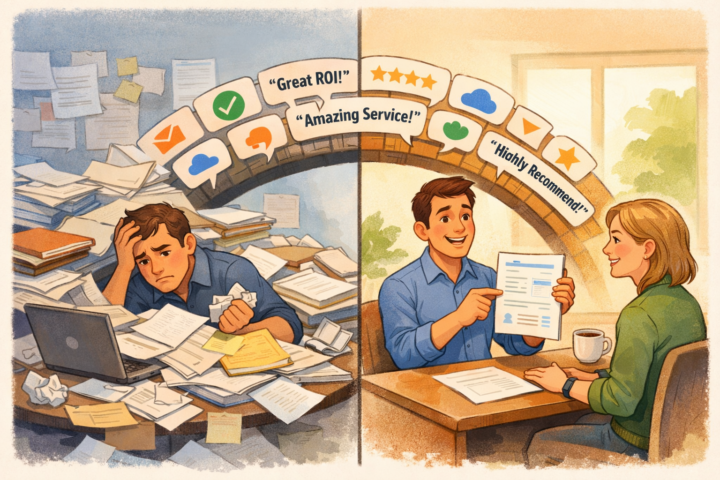

Here’s a statistic that should make every B2B marketer uncomfortable: according to industry research, roughly two-thirds of B2B marketers have no direct communication with customers.
Let that sink in. The people responsible for crafting your messaging, positioning your product, and attracting new buyers have never actually talked to the people they’re trying to reach.
It’s like writing a restaurant menu without ever tasting the food.
The Account Management Barrier
How did we get here? The answer lies in how most B2B companies structure their customer relationships.
After a deal closes, ownership transfers to an Account Executive or Customer Success Manager. Their job is to manage the relationship: handle renewals, drive adoption, identify upsell opportunities, and serve as the customer’s internal advocate.
This model works well for most things. But it creates an unintended wall between marketing and the customers they need to understand.
CSMs are protective of their accounts—and for good reason. Every interaction is a potential risk. What if marketing says something that creates confusion? What if a customer gets annoyed by too many requests? What if a reference call goes sideways and damages a renewal?
So marketing gets filtered access at best. A quote here. A case study interview there. But the kind of ongoing, direct dialogue that builds true customer understanding? That almost never happens.
What Marketing Loses Without Customer Access
The consequences of this disconnect show up everywhere—even when marketers don’t realize the root cause.
Messaging That Misses the Mark
When you don’t talk to customers, you end up describing your product the way you think about it—not the way buyers experience it. Your website talks about “enterprise-grade scalability” when customers actually care about “not getting paged at 2 AM.” Your case studies emphasize features when buyers want to hear about outcomes.
The best marketing language comes directly from customers. The phrases they use. The problems they describe. The results they celebrate. Without that input, even talented marketers are guessing.
Content That Doesn’t Resonate
Blog posts, webinars, whitepapers—B2B marketing runs on content. But what should you write about? What questions are buyers actually asking? What objections are they raising in sales calls?
Marketers without customer access end up creating content in a vacuum. They chase keyword trends and competitor topics instead of addressing the real concerns of their audience. The result is content that checks SEO boxes but fails to connect.
Campaigns Built on Assumptions
Every campaign makes assumptions about what motivates buyers. Pain points. Decision criteria. Objections. Desired outcomes.
When those assumptions are based on secondhand information—or worse, internal brainstorms—campaigns underperform. You’re spending budget to reach people with messages that don’t reflect their reality.
Weaker Sales Enablement
Marketing is supposed to arm sales with tools that help close deals. But how can you create effective battlecards, objection handlers, or competitive positioning if you’ve never heard a customer explain why they chose you over the alternative?
The marketers who produce the best sales enablement are the ones who’ve listened to customers describe their buying journey firsthand.
The Reference Connection
Here’s where customer reference programs become unexpectedly powerful.
Most companies think of references as a sales tool—something to pull out late in the deal cycle when a prospect wants validation. But a well-structured reference program is also one of the best ways to reconnect marketing with real customer voices.
References as Research
Every reference call is a window into how customers think and talk about your product. What do they emphasize? What surprised them? What results do they highlight first?
When marketing has visibility into reference activity—not just the names, but the substance of what customers are saying—they gain an ongoing stream of qualitative research. No formal interviews required.
Voice-of-Customer at Scale
Companies with mature reference programs often capture video testimonials, written Q&As, and detailed success stories. This content doesn’t just help sales; it gives marketing a library of authentic customer language to draw from.
Instead of guessing what messaging will resonate, marketers can see exactly how happy customers describe the problem they faced, the solution they found, and the impact it created.
Breaking Down the Silos
A reference program that spans sales, marketing, and customer success creates natural collaboration. When marketing helps recruit advocates, they build relationships with customers. When they see which references are most effective for different buyer segments, they learn what messages actually land.
The wall between marketing and customers doesn’t have to be permanent. References are one of the few doors that everyone agrees should be open.
How to Fix the Disconnect
If your marketing team is stuck on the wrong side of the customer wall, here are practical steps to change that.
Formalize Marketing’s Role in Reference Programs
Don’t leave references entirely to sales and CS. Give marketing a seat at the table—both in recruiting advocates and in leveraging reference content. When marketing is involved, they naturally get more customer exposure.
Create Voice-of-Customer Feedback Loops
Set up a system where insights from reference calls, customer interviews, and testimonial captures flow back to marketing regularly. This could be a shared Slack channel, a monthly summary, or tags in your reference management platform. The format matters less than the consistency.
Run Cross-Functional Customer Sessions
Some companies host quarterly sessions where sales, marketing, CS, and product all listen to customers together—either live or via recorded calls. This shared exposure builds empathy and alignment that no internal meeting can replicate.
Make Reference Content a Marketing Asset
Treat your testimonials, video clips, and case studies as a content library—not just sales collateral. Marketing should be able to search for quotes by industry, use case, or persona and use that language directly in campaigns.
Track What Resonates
If you’re running a reference program with any kind of analytics, share those insights with marketing. Which customer stories get the most engagement? Which testimonials show up in won deals? This data helps marketing prioritize what to create next.
The Bottom Line
Marketing can’t do its job without understanding customers. And in most B2B companies, the existing structures make that understanding almost impossible to achieve.
Customer reference programs offer a bridge. They give marketing ongoing access to how customers talk, what they value, and why they chose you—without requiring CS to hand over the keys to their accounts.
The best marketing doesn’t come from clever campaigns or trending tactics. It comes from deeply understanding the people you’re trying to reach. And that starts with actually talking to them.
lyynx helps GTM teams manage references while giving everyone—sales, marketing, and CS—visibility into what customers are really saying. Learn more →